
LCC Working Group
LCC Working Group
A volunteer group of SLTC members are working with the Leather Conservation Centre in Leicester to support in understanding the composition of modern leathers. The LCC aim to house a library of leathers that can be used to support conservation and restoration of leather.
Purpose of the Working Group
The Leather Conservation Centre is an important facility for the continued strength and longevity of the leather industry. SLTC has committed to support the LCC and to contribute to the work being carried out in the fields of restoration and conservation.
The LCC is an important international organisation that has a wealth of information on how to treat, restore and preserve ancient and old leathers, but do not have enough knowledge or understanding on the composition of more modern leathers from circa 1920s onwards. Additionally, there is a lack of example modern leathers that can be referenced.
Our SLTC membership is made up of eminently knowledgeable experts, leather technologists, scientists, chemists and educators and we believe that there is a natural synergy for SLTC to support LCC with their endeavours. A voluntary working group has been convened, chaired by Karl Flowers, for this purpose and there are 2 main areas of focus:
- Understanding modern leather composition.
- Creating a library of modern leather samples / profile recipes for reference.

‘Modern Leathers’ – knowledge gathering for cultural heritage
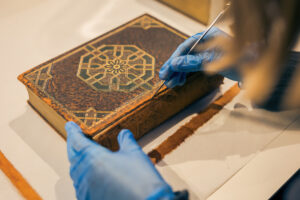
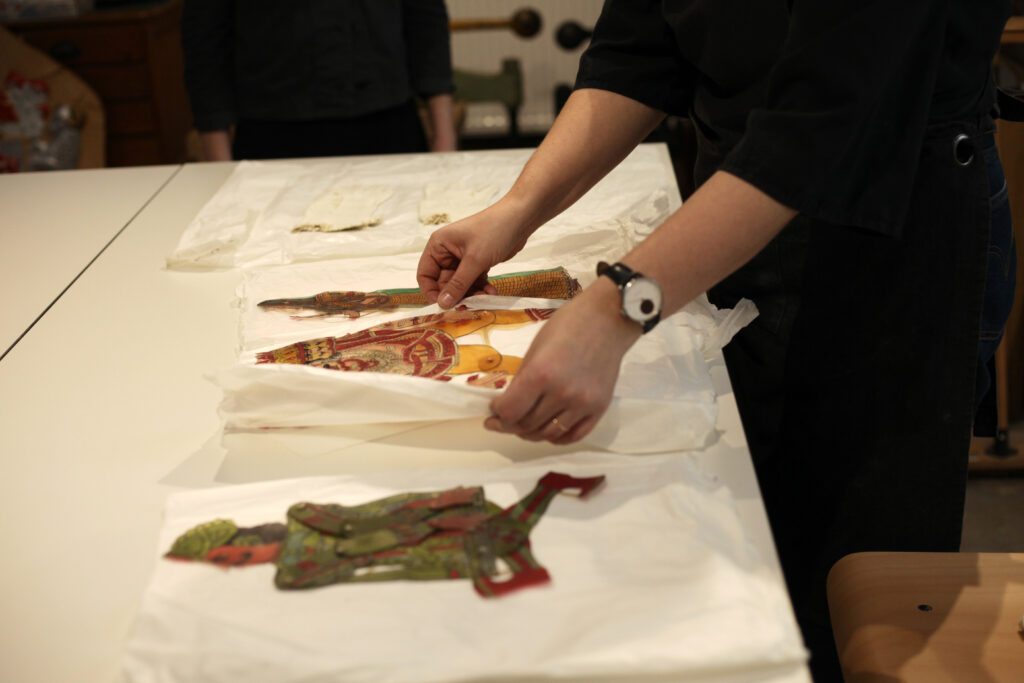
The Leather Conservation Centre (LCC) are global experts in the field of leather conservation and have extensive knowledge on the manufacture and deterioration mechanisms at play for traditional leather and skin-based materials. However, ‘modern leathers’ – those industrially produced from around the 1920’s onwards using new materials and techniques – are posing new emergent challenges and risks, at an increasing rate. These materials cover a broad range of heritage collection types, the extent of which is yet to be fully determined, but include transport, furniture, fashion, utility, medicine, and social history.
In order to establish suitable preservation approaches, there is a need to fill current knowledge gaps and create a record of developments throughout this period; a task that has presented a collaborative opportunity for the LCC and SLTC.
Current approaches to the preservation of these materials rely heavily on research from the plastics conservation field and has limited direct application. This lack of knowledge means conservators working with modern leathers are limited in what they can do to care for these materials; treatment is dictated by the type of collection the object is in (i.e. fashion collection or automotive collection), the expertise and resources of the conservators, and/or best practice approaches to the conservation of plastics (which is still a very limited arsenal). Current approaches do not generally account for the leather component, and thus the material as a whole. Although well intentioned, such approaches come with risk – history has taught us that treating one material according to the recommendations of another can cause long-term damage!
As an initial stage in this large, multifaceted project, the aim is to establish a holistic history of developments, both direct and indirect that have had an impact on the physical properties and characteristics of modern leathers, to help conservators understand both their chemistry and wider manufacturing context.
Some of the information to be researched will include (but is not limited to) the introduction of new mineral and synthetic tannages, new combination tannages, changes in quality of the raw material, shifts in consumer trends, market forces and end uses. Of particular interest is information about surface finishes throughout this period – new and changing formulations, and methods of application. Experience to date indicates that these pose the most immediate risk to ‘modern leathers’, displaying issues such as blooming, tackiness, colour change and delamination, amongst others.
Alongside initial information gathering, the creation of a material library of examples of ‘modern leathers’ to use for reference and research purposes is planned.
The aim is to better understand degradation mechanisms and aging properties, determine vulnerability to environmental agents of deterioration and ultimately inform appropriate conservation treatments and suitable long-term preventive care approaches. As well as physical samples, it is hoped that recipes and any other manufacturing information can be documented to create a holistic, informative and useful archive. Any proprietary recipes will be protected and used strictly for research and education purposes only.
Get Involved
If you would like to support this valuable work, please send an email to the Member Secretary by clicking below:
To find out more about the Leather Conservation Centre, you can visit the website here:
Current Working Group Members
Karl Flowers, Technical Director at Authenticae – Chair
Rosie Bolton, Head of Centre at the Leather Conservation Centre
Arianne Panton, Manager of Conservation and Research at the Leather Conservation Centre
Johnny Kleynhans, Exotic Leather Specialist at Johnny Kleynhans Consulting
Steve Linde, General Manager at Richard Kane
Tom Marcus, Retired
Jesse Meyer, Owner at Pergamena
Lei Sun, Senior Leather Technologist (Finishing) at Bridge of Weir
Karen Vidler, Lecturer and Vocational Trainer at Book Conservation Services
Current Workstreams
Part 1: Leather Finish Conservation (1926-2026)
1.1 Construction of 3 part leather finish information article series (1926-2026)
1.2 Establishment of a leather finish sample library (to be housed at LCC)
1.3 Expansion of the leather finish library
Part 2: Leather Crust Conservation (1926-2026)
2.1 Construction of 3 part leather crust information article series (1926-2026)
2.2 Establishment of a leather crust sample library (to be housed at LCC)
2.3 Expansion of the leather crust library
Part 3: The historical nature of leather technology and recording
Develop participation of SLTC members to document the changes over the last 100 years for record.