Inhibiting Lipolytic Haloarchaeal Damage On Brine Cured Hides With Halocin Producer Strains
Abstract
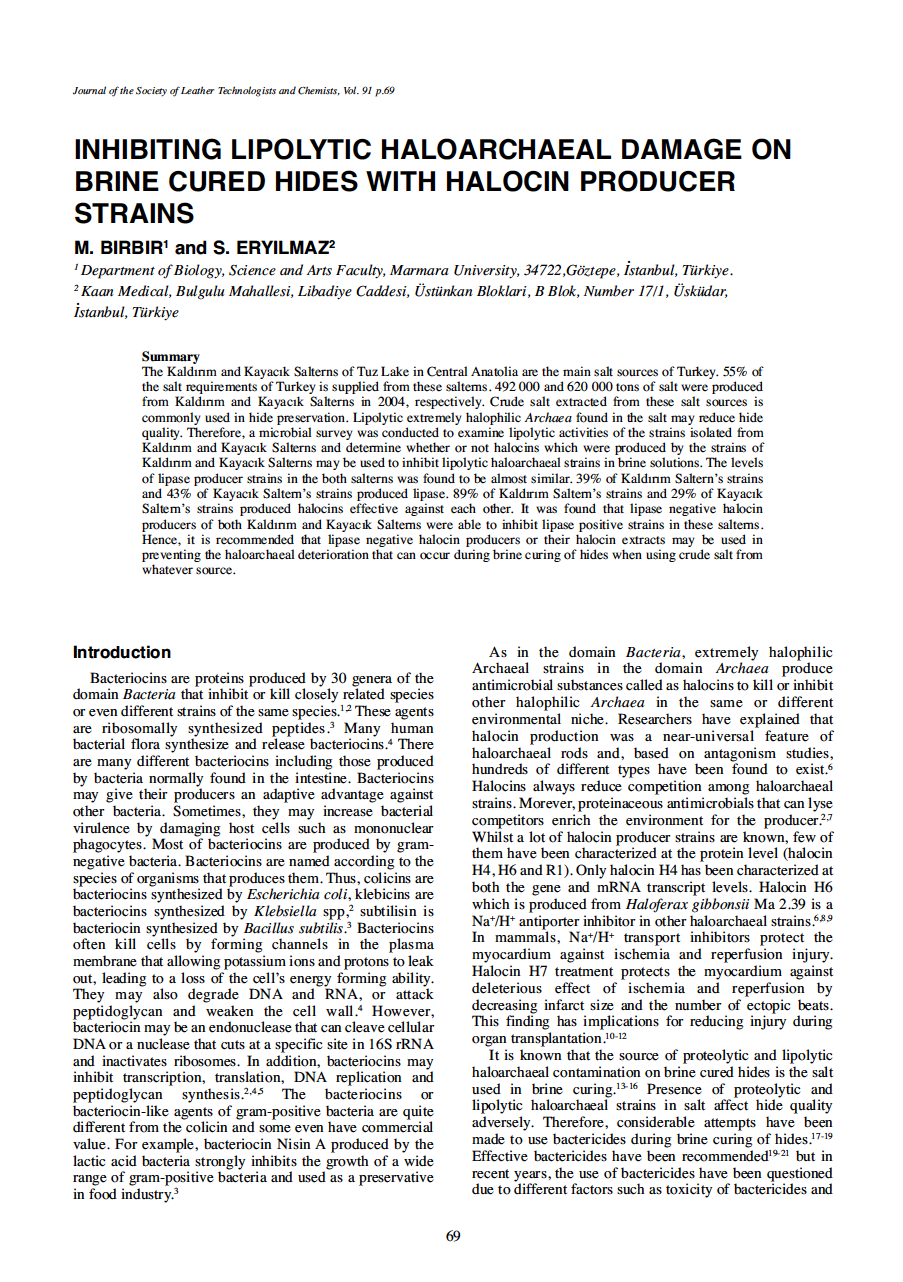
The Kaldırım and Kayacık Salterns of Tuz Lake in Central Anatolia are the main salt sources of Turkey. 55% of the salt requirements of Turkey is supplied from these salterns. 492 000 and 620 000 tons of salt were produced from Kaldırım and Kayacık Salterns in 2004, respectively. Crude salt extracted from these salt sources is commonly used in hide preservation. Lipolytic extremely halophilic Archaea found in the salt may reduce hide quality. Therefore, a microbial survey was conducted to examine lipolytic activities of the strains isolated from Kaldırım and Kayacık Salterns and determine whether or not halocins which were produced by the strains of Kaldırım and Kayacık Salterns may be used to inhibit lipolytic haloarchaeal strains in brine solutions. The levels of lipase producer strains in the both salterns was found to be almost similar. 39% of Kaldırım Saltern’s strains and 43% of Kayacık Saltern’s strains produced lipase. 89% of Kaldırım Saltern’s strains and 29% of Kayacık Saltern’s strains produced halocins effective against each other. It was found that lipase negative halocin producers of both Kaldırım and Kayacık Salterns were able to inhibit lipase positive strains in these salterns. Hence, it is recommended that lipase negative halocin producers or their halocin extracts may be used in preventing the haloarchaeal deterioration that can occur during brine curing of hides when using crude salt from whatever source.
£20.00
Are you a member? Log in for access to the article.
Volume Number
91
Author(s)
M. BIRBIR; S. ERYILMAZ
Inhibiting Lipolytic Haloarchaeal Damage On Brine Cured Hides With Halocin Producer Strains