Salt pH Effects on Collagen Thermal Stability in Pickling and Curing
Abstract
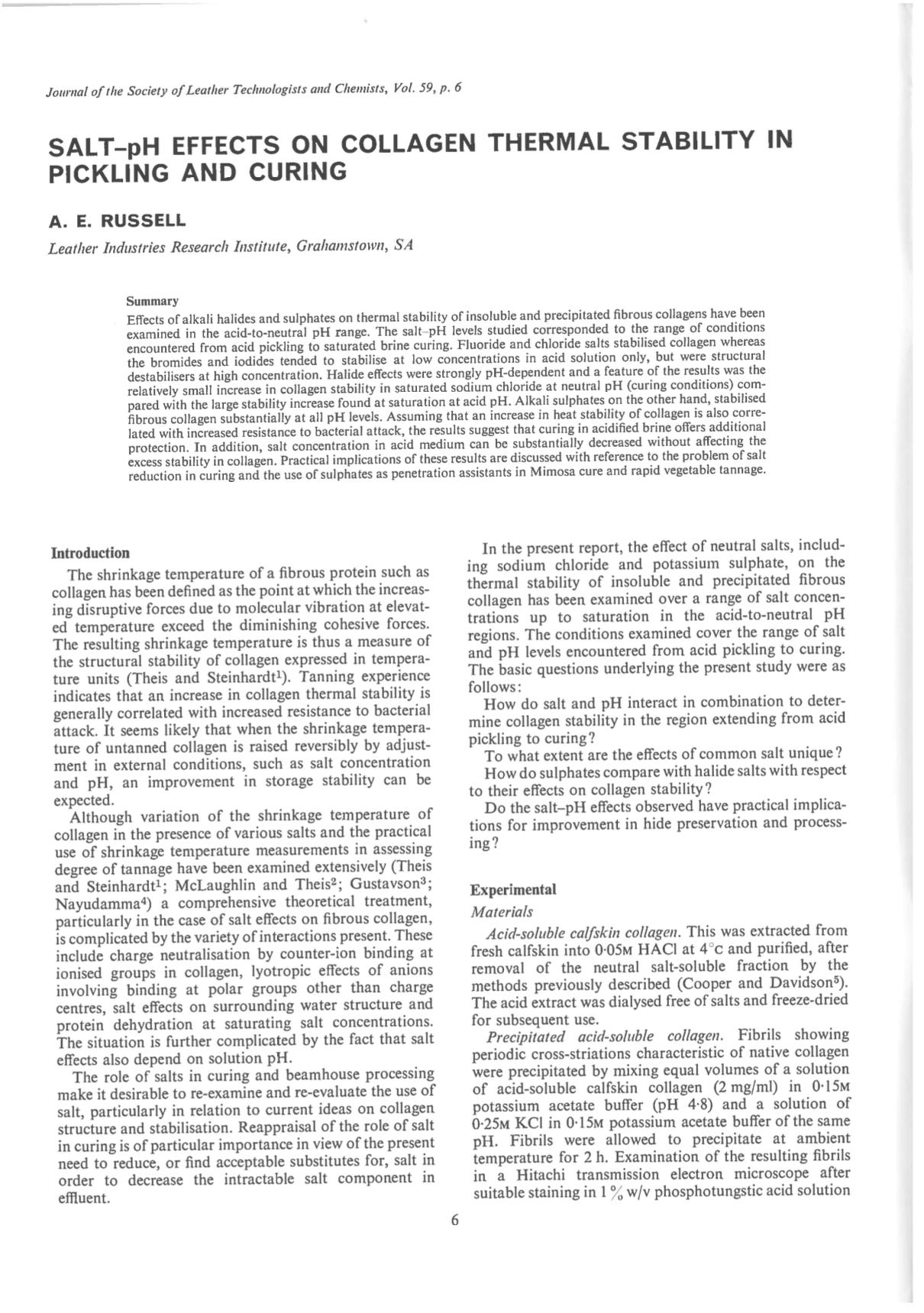
Effects of alkali halides and sulphates on thermal stability of insoluble and precipitated fibrous collagens have been examined in the acid-to-neutral pH range. The salt-pH levels studied corresponded to the range of conditions encountered from acid pickling to saturated brine curing. Fluoride and chloride salts stabilised collagen whereas the bromides and iodides tended to stabilise at low concentrations in acid solution only, but were structural destabilisers at high concentration. Halide effects were strongly pH-dependent and a feature of the results was the relatively small increase in collagen stability in saturated sodium chloride at neutral pH (curing conditions) compared with the large stability increase found at saturation at acid pH. Alkali sulphates on the other hand, stabilised fibrous collagen substantially at all pH levels. Assuming that an increase in heat stability of collagen is also correlated with increased resistance to bacterial attack, the results suggest that curing in acidified brine offers additional protection. In addition, salt concentration in acid medium can be substantially decreased without affecting the excess stability in collagen. Practical implications of these results are discussed with reference to the problem of salt reduction in curing and the use of sulphates as penetration assistants in Mimosa cure and rapid vegetable tannage.
£20.00
Are you a member? Log in for access to the article.
Volume Number
59
Author(s)
A. E. RUSSELL
Salt pH Effects on Collagen Thermal Stability in Pickling and Curing