
SLTC Memorials
SLTC Memorials
Recognising five intrinsic contributers to the Society of Leather Technologists and Chemists, written by Karl Flowers, SLCT Council Member, Northampton, UK
Summary
There are five great contributors to the Society of Leather Technologists and Chemists (SLTC), Procter, Atkin, Wolstenholme, Jordan Lloyd, and Burton, that have not only changed the direction, purpose and understanding of what the Society is, but have also contributed to a legacy that will hopefully give the Members opportunities, that will shape their lives in the future.
Introduction
The purpose of this publication is to record (where possible), for historical purposes the lives of the Society’s greatest contributors, and to describe in some detail the memorials that were introduced to the SLTC – either through them literally setting up the memorial, or through inspired surviving members of the Society creating a memorial in their idol’s name. SLTC members who have more information about the great heroes of the Society are very welcome to correspond with the Honorary Editor where an erratum to this article can be produced – the records of these memorials are not well documented. The five memorial individuals of the Society of Leather Technologists and Chemists is given in Table I.
|
TABLE I The five individuals memorialised by the SLTC
1. Henry Richardson Procter (1848-1927, aged 69) 2. William (Bill) Rearden Atkin (1890-1950, aged 60) 3. Stanley Wolstenholme (died 1988) 4. Dorothy Jordan Lloyd (1889-1946, aged 57) 5. Donald Burton (1892-1966, aged 74) |
Mentioned in no specific order, these individuals ranged from leather scientist, through leather technologist, to biochemist and institute director – none of these titles diminished the outstanding contributions they made. What they all have in common is an obvious overwhelming influence on the industry and the Society during the peak of each of their careers.
A cursory glance of the Proceedings of the Society during their peak was typified by each member being the President, Secretary, Editor, or Treasurer at some point. All five actively published in the Journal and were active in solving industry problems. In the case of Dorothy Jordan Lloyd, DJL, a typical example was her being honoured by the Tanning Council of the USA – she was awarded the Fraser Muir Moffat Medal for her efforts in service of the industry. Many of them received similar accolades, within and outside the UK and wider leather industry. All five obituaries of these leading figures, often replicated (unique or not) in industry and external publications, were detailed and represented a desperate sense of sorrow at the departure of the icon in question.
The memorials set up, were either in the parent Society or were initially represented in the subsidiary groups they were active in. Early in the development of the Society the memorials were simply an acknowledgement (with normally a monetary/privilege associated with a fellowship for the speaker) of great individuals. Speakers were chosen using dynamic criteria, that were modified as the needs of the Society changed. It is fair to say that today the Society continues to honour its great predecessors but has focussed (based on the author’s review of the topics) on each of the five memorials being attributed to a specific focus detailed below in Table II.
|
TABLE II The general fellowship focus for each of the five SLTC memorials (author’s interpretation)
1. Henry Richardson Procter – collagen, leather science 2. William (Bill) Rearden Atkin – application of science, leather technology 3. Stanley Wolstenholme – leather and allied industry history 4. Dorothy Jordan Lloyd – travel bursary for young leather professionals 5. Donald Burton – fellowship to commemorate a notable leather essay and research |
In general, the Memorials were celebratory of their namesakes, and the Fellowship was enacted through a nominated fellow giving a public address to an SLTC audience – with the DJL Fellowship not having a speaking requirement. The Procter Memorial was typically given at the parent Society’s Conference, with the Atkin, Wolstenholme, and Donald Burton Memorial generally being given at the Northern Group’s Meetings. The Atkin and Wolstenholme Memorial lectures moved to the parent Conference from the 1970s onwards, intermittently at first, and then a rolling round robin usually Wolstenholme, Procter, and Atkin in sequence. From 2023, the Society changed to a Procter, Wolstenholme, and Atkin sequence meaning that 2026 should be a Procter Memorial. The Donald Burton Prize winner has not been formally asked to speak at an SLTC meeting since the early 2000s, where a DB Prize was awarded by the Northampton Group to a British School of Leather Technology student. According to the Journal the last DB Prize was awarded to G. Defeo in 1995.
Dorothy Jordan Lloyd
One of the most impressive SLTC contributors that was not a member of the elite Leeds University, Procter Department of Food and Leather Science (previously the Leather Industries Department of Yorkshire College), but Dorothy Jordan Lloyd, who was a generous, talented scientist who entered the industry through her biochemical and zoological background.
“She came of a medical family with academic associations, her father being Professor of Operative Surgery at Birmingham University. From King Edward School, she came up to Newnham in 1908 and obtained a first in both parts of the Natural Sciences Tripos. Her research career began when she was awarded the Bathurst Studentship, and was continued as holder, from 1914 to 1920, of a Newnham College Fellowship. In 1916, at the early age of 27, she obtained her D.Sc. degree at London University”. 1
The answer to how she joined the industry is detailed further in her obituary:
“Her work on gelatin and other proteins made Dorothy Jordan Lloyd a natural choice for the staff of the newly formed B.L.M.R.A. From that time onward, to her undiminished contributions to the fundamental physical chemistry of gelatin were added many others on the technical aspects of the manufacture and use of leather. In 1927, on Dr Pickard’s resignation, she was appointed Director.”
BLMRA flourished under her leadership through her competence, energy, and striking vision. These credentials are underscored by her accolades:
“She took an active part in scientific organization, being from 1936 onwards a Member of Council, chairman of various committees, and eventually a Vice-President of the Royal Institute of Chemistry, a member of the Advisory Board of the Imperial Institute and from 1942 a Visitor of the Royal Institution.”
The DJL Memorial Fund was established in the 1940s. Dorothy passed in 1946 and in the editorial of the Journal (Number 6) of 1949 the details of the memorial are published.2 The SLTC Council proposed the “Dr Dorthy Jordan Lloyd Travelling Fellowship” – where it is detailed that appointments to the Travelling Fellowship is made by the SLTC Selection Committee (at the time detailed as Director of the BLMRA, the Principal of the Leathersellers’ College, the Principal of Leeds University). Today the selection is made by the Trustees who comprise “The Doctor Dorothy Jordan Lloyd Memorial Fund”, a UK Charity.
The Fellowship is initiated by any member of the SLTC applying to the Membership Leather UK or a SLTC officer (the officer will forward the request to Leather UK and the Select Committee). The DJL Selection Committee will then decide to award (or not) the DJL Fellowship, for the current amount, agreed for that year. The criteria for the DJL are as per the UK Charity Commission website: “The Trust makes travel grants to people who work in the leather industry or who are studying leather related subjects.” Further, the DJL applicant.
DJL was President of the Society before Donald Burton (around 1940) and she was an active member who contributed to the scientific functioning of the Society. Dorothy and her subsequent travelling memorial fund facilitate the attendance of young, aspirational leather scientists and technologists at meetings, allowing them to follow in her footsteps allowing them to continue the great contributions to the leather science much needed by the industry.
Henry Procter
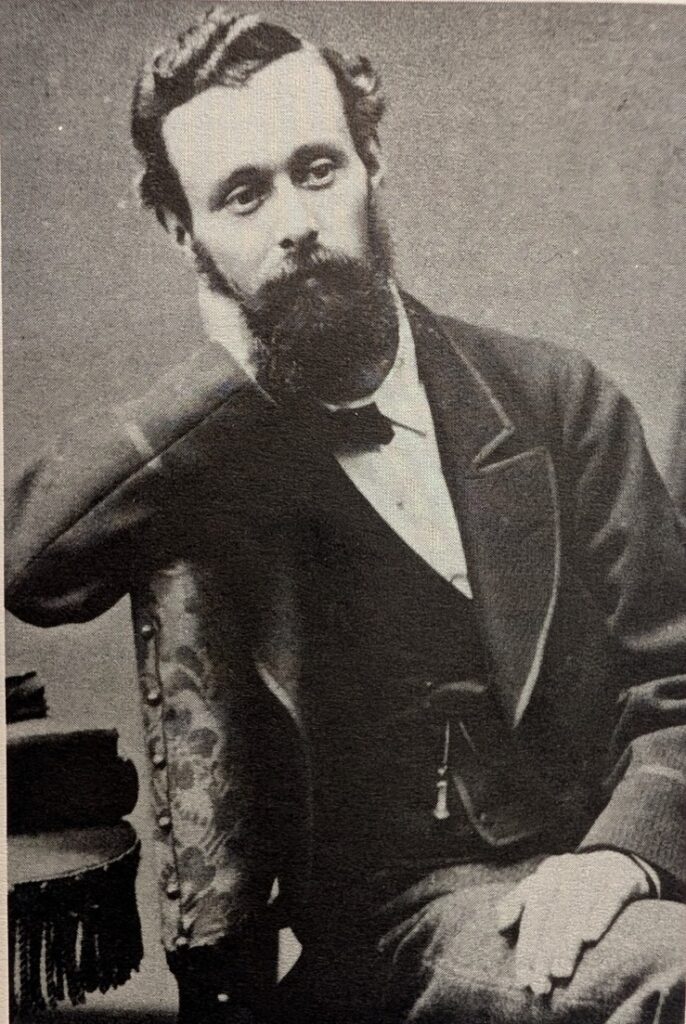
Henry’s obituary is published in full in the Journal in 1928. Written by F.C. Thompson as part of a commemorative issue.3 Henry is also the subject of Professor Ward’s 1975 biography and in Jackman’s biography of 1993. 4,5 This article would be dwarfed by a repeat of the reintroduction of what the man is celebrated for – so in summary Henry was one of the original founders of the International Association of the Leather Trades’ Chemists (IALTC) and was President of that Society from 1909-10, and 1917-1924 when the UK Society (Society of Leather Trades’ Chemists, SLTC) split off from the International group (International Society of Leather Trades’ Chemists, ISLTC) in 1917.
Henry jointly served (with J.G. Parker) as the Honorary Secretary of the IALTC from 1897 to 1901. Henry also contributed and edited the SLTC and ISLTC publications from 1917-1924. These were just his official officer roles, not a lot is mentioned about his service as an SLTC member, but speculation on whether he was a good serving member is more than compensated by the weight of his scientific contribution (look to the references for full details).
Initially the Procter Memorial Fellowship was a working fellowship – that is the nominated fellow would receive the Fellowship stipend and would have to “serve” their fellowship at Leeds University working on the topic selected in their successful application. The modern Procter Memorial Lecture is decided by the Conference Committee, who are tasked with selecting suitable candidates that would be able to deliver the Procter Lecture on the topics of collagen and leather science, see Table II.
Many candidates of the Procter Memorial have seen it fitting to address the man himself as a preamble to their talk, honouring the man, and setting the tone to relate how their research and understanding, advances the field of leather science – something Henry would have been most proud about.
William Atkin
William Rearden Atkin, M.Sc. did not hold a PhD, although he was proficient in chemistry. The fact that he did not complete his PhD, but was a full-time professor at Leeds University in his latter years, is probably attributable that he did serve for the British Army during World War I. His obituary in the Journal was written (possibly) by A.Harvey and published in the Journal in 1950.7
He was wounded twice during the Great War, first in the shoulder at Ypres and was then hit in the head by a sniper at the Battle of the Somme in 1915. The shot was not debilitating or life-threatening and he made a full recovery; he resumed work at Leeds University under Prof. D. McCandlish. William worked closely with F.C. Thompson on many scientific issues and were particularly collaborative when working on vegetable tanning extracts, culminating in the “Atkin-Thompson” method of analysis.
William was President of the SLTC (and ISLTC) from 1938 to 1939 and possibly again around 1945 (difficult to know exactly as the Presidents were complicated by national service, P. Champard and W. Atkin both appearing in the publications as being President. He was Honorary Editor from 1924 to 1930 and published significantly, whilst also serving as Chairman of the Committee that collaborated on the ISLTC and SLTC publications.
It is less clear from the literature when the first official Atkin lecture took place (maybe a more knowledgeable Journal reader can enlighten the readers). One of the first Atkin speakers is recorded as P. Stanley Briggs who spoke on “Towards a waterproof tannage” in 1970. The veil of uncertainty is complete, as in the beginning, the Atkin Memorial takes place in the Northern Group of the Society and it is not well documented in the Journal. It is also not clear in the Journal as to what the conditions of the Atkin Memorial is as the Proceedings and Minutes of Society business does not detail it as much as the Procter, DJL, or Donald Burton Prize are described.
As shown in Table II, the focus of speakers in the Atkin address cover topics focussed more on the application of the leather science but also seem to focus on pure technology topics such as H.H. Shepherd speaking on “Modern tannery engineering” in 1986. Many topics addressed impacts of recently discovered science and how they were going to impact the industry looking forward. The intention of the Atkin is to look more at the technology rather than the science itself but could look at the effects of the technology on the fundamental substrate, like G. Reich’s “The structural changes of collagen during the leather making process”. The Atkin Memorial for 2025 was delivered by K. Senior, “Behind the craft: the role of technology in the future of leather”, with the next Atkin scheduled for 2028.

Donald Burton
Another tireless officer in the Society was Donald Burton. He was only nominated to the Society by the three most outstanding people: H.R. Procter, W.R. Atkin, and F.C. Thompson, in 1919.8 He started his career, after graduating from Leeds, by working on chemistry most needed for the war. He was awarded the Order MBE after being seriously injured at the Copley munition works for his role in minimising that disaster.
Donald served at Leeds University, in the Leather Industries Department as initially an assistant to H.R. Procter. He published prolifically, over 100 publications in Society and other publications and served on many industry and academic committees. It was his love for publication that inspired his initiative (while he was alive) to start the Donald Burton Prize helping to motivate young people to publish in the leather industry.
Donald is known in the Society as the “Father of Groups”. He was instrumental in starting at least four of them during his presidency. Northampton, Manchester, London, and Yeovil were added under his watch, and he actively encouraged groups to have speakers and to share knowledge, something carried forward as his memorial.
The rules of the Donald Burton Prize have also changed over the years, but they have remained largely the same since 1995. The candidate must be under the age of 35 at time of submission; the essay can be on any topic of leather manufacture; should not have been published; and must be submitted by the 31st of May of each year. The Honorary Editor, the Vice President, and the Honorary President (confirmed by the Council) then award a certificate on parchment and 2 years free Society membership. Applicants should submit their entry to the society Honorary Editor.
Stanley Wolstenholme
A much less researched officer of the Society was Stanley Wolstenholme. The Society knows from the Journal that Stanley died in 1988, from his obituary. But there is not a lot written about him. Stanley was President from 1979 to 1980 and he was Honorary Editor from 1978 to 1983 – that is, he was incoming Vice President in 1978; then President in 1979 to 1980; outgoing Vice President in 1981; while being the Editor of the Journal (until 1983) at the same time. He was, like the others mentioned above another prolific publisher, choosing to publish on topics like shoe leather, chrome dyeing, and the famous revolutionary process research performed by P. Laight whom Stanley helped supervise. Stanley was Head of Department at Leeds University at the time.
Even more enigmatic is the rules for the Wolstenholme lecture which was another regular feature at the SLTC (Northern Group) meetings. The Wolstenholme topics were always focussed on the history of leather making with leathers associated with the Mary Rose or the UK national leather collection but also delved into management and technological practices in the past. The last Wolstenholme lecture was delivered by M. Collins which looked at diagnostics associated with parchment collections, held in 2024 and the next Wolstenholme is due in 2027.
Conclusion
Finally, it is worthwhile noting that while there may have been five heroes of the Society to date, it is not impossible that selfless Members of the Society are waiting in the wings. This is especially true through the experienced retired members who can turn their lifetime of experience into information and skills that are shared with future generations. Officers of the society may occupy the lines listed against job titles and roles, but it is the future generations that should be inspired by these great leaders to take those job titles and convert them into something a little more special – just like Dorothy, William, Henry, Stanley and Donald did.
Acknlowedgements
The author would like to extend his thanks to Malcolm Leafe and Graham Lampard in assisting with this article.
References
- Bate-Smith, E.C., Obituary Notice: Dorothy Jordan Lloyd, J. 1947, 41(4), 481. doi: 10.1042/bj0410481. PMID: 16748198; PMCID: PMC1258521.
- Holmes, N.L., Editorial. Dr Dorothy Jordan Lloyd Memorial Fund. Soc. Leather Trad. Chem. 1949, 33(6), 195.
- Thompson, F.C., Henry Richardson Procter, D.Sc., F.I.C., F.R.S., in Procter Memorial Issue, Int. Soc. Leather Trad. Chem., 1928, 12, 93.
- Ward, A.G., Henry Richardson Procter – his life and contributions to science, Soc. Leather Technol. Chem.,1975, 59(6), 61.
- Jackman, J., Henry Richardson Procter, his early life 1848-1891, Soc. Leather Technol. Chem.,1993, 77(2), 35.
- Photograph courtesy of The Bootham School Archives.
- Harvey, A., Obituary Notice: William Rearden Atkin, M.Sc. Soc. Leather Trad. Chem. 1950, 34(10), 365.
- Humphreys, G.H.W., Obituary Notice: Donald Burton. Soc. Leather Trad. Chem. 1966, 50(11), 393.