Antibiotics to Control Green Hide Biodeterioration
Abstract
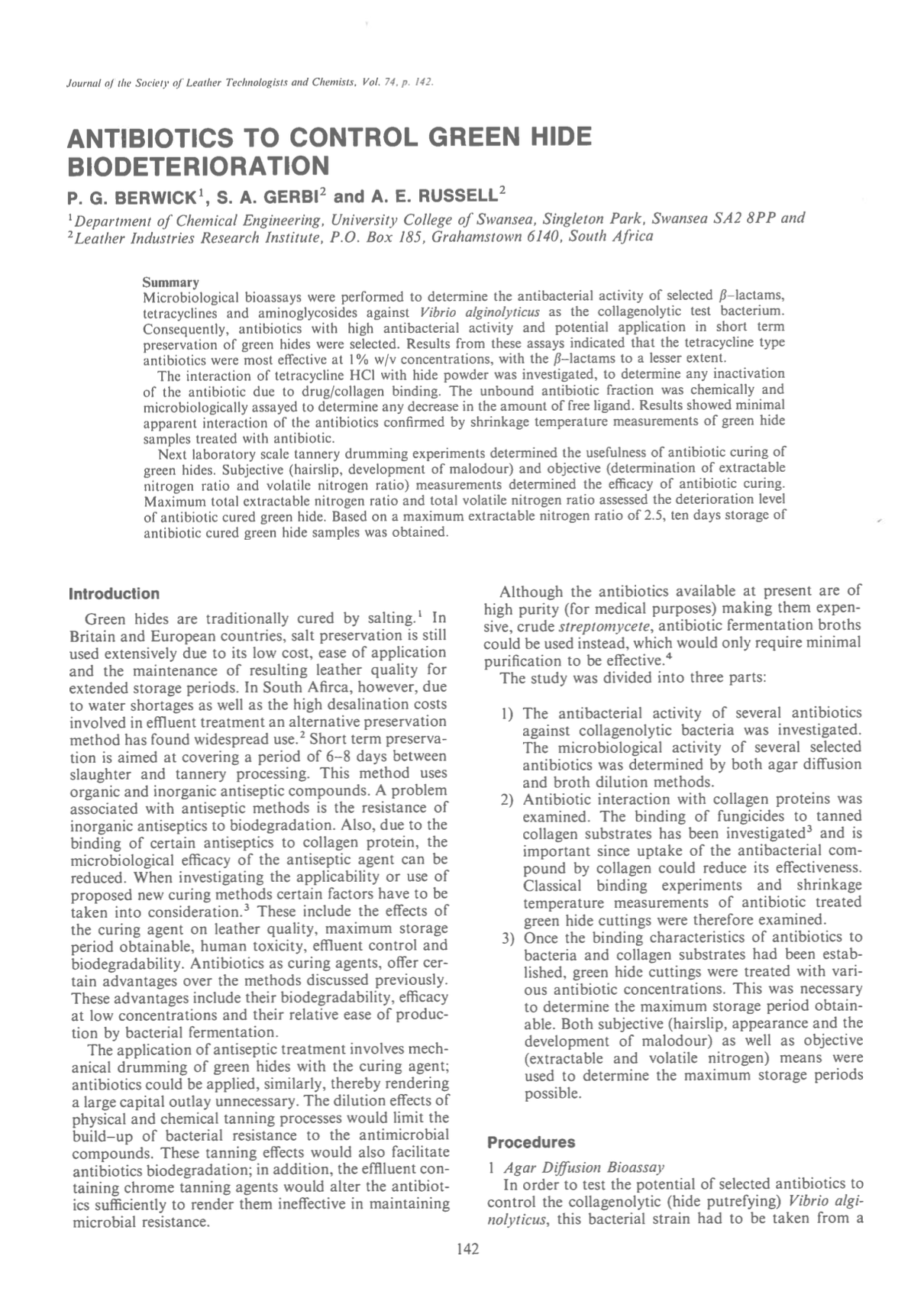
Microbiological bioassays were performed to determine the antibacterial activity of selected β-lactams, tetracyclines and aminoglycosides against Vibrio alginolyticus as the collagenolytic test bacterium. Consequently, antibiotics with high antibacterial activity and potential application in short term preservation of green hides were selected. Results from these assays indicated that the tetracycline type antibiotics were most effective at 1% w/v concentrations, with the β-lactams to a lesser extent. The interaction of tetracycline HCL with hide powder was investigated, to determine any inactivation of the antibiotic due to drug/collagen binding. The unbound antibiotic fraction was chemically and microbiologically assayed to determine any decrease in the amount of free ligand. Results showed minimal apparent interaction of the antibiotics confirmed by shrinkage temperature measurements of green hide samples treated with antibiotic. Next laboratory scale tannery drumming experiments determined the usefulness of antibiotic curing of green hides. Subjective (hairslip, development of malodour) and objective (determination of extractable nitrogen ratio and volatile nitrogen ratio) measurements determined the efficacy of antibiotic curing. Maximum total extractable nitrogen ratio and total volatile nitrogen ratio assessed the deterioration level of antibiotic cured green hide. Based on a maximum extractable nitrogen ratio of 2.5, ten days storage of antibiotic cured green hide samples was obtained.
£20.00
Are you a member? Log in for access to the article.
Volume Number
74
Author(s)
P. G. BERWICK; S. A. GERBI; A. E. RUSSELL
Antibiotics to Control Green Hide Biodeterioration