Clean Technologies, Targets Already Achieved And Trends For The Coming Years
Abstract
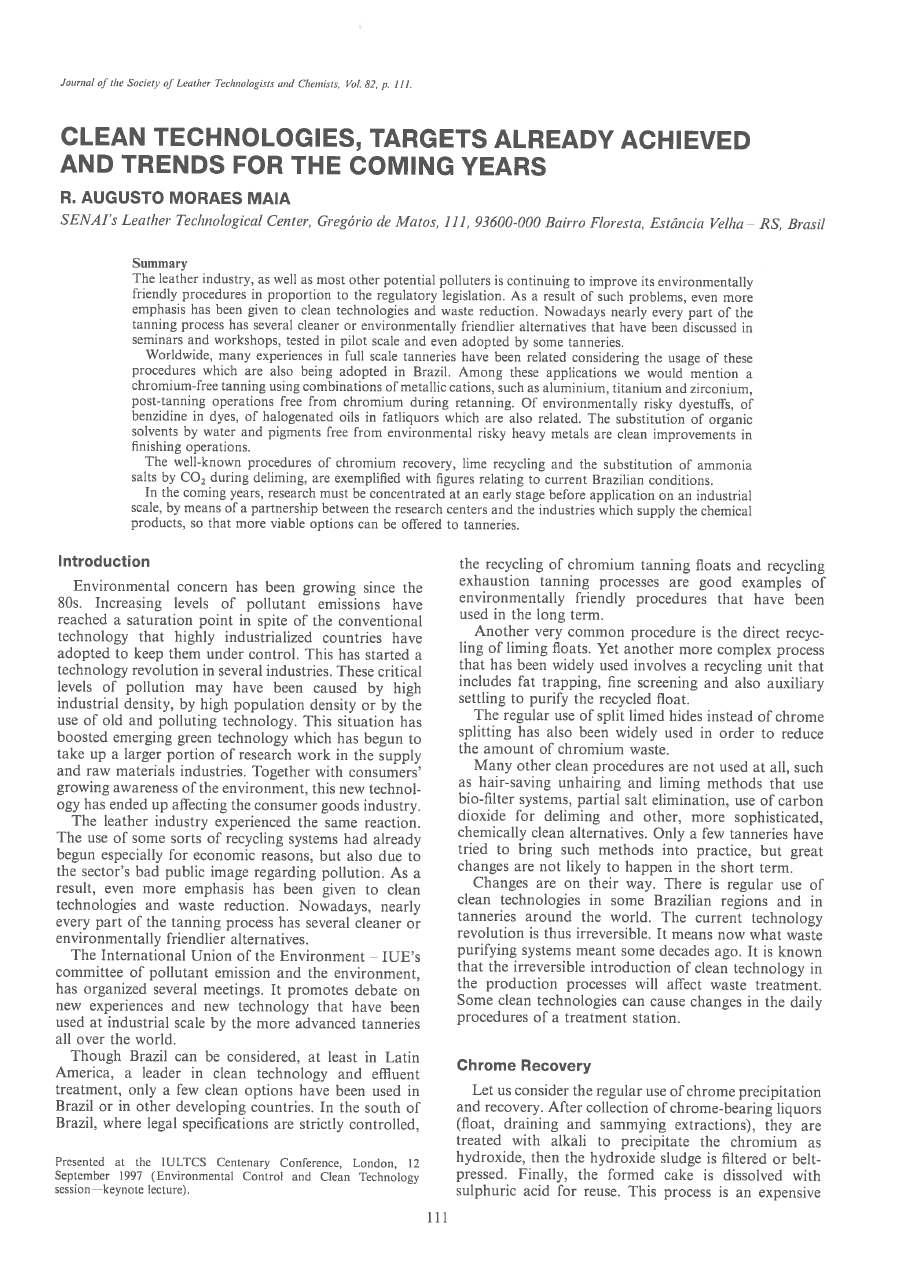
The leather industry, as well as most other potential polluters is continuing to improve its environmentally friendly procedures in proportion to the regulatory legislation. As a result of such problems, even more emphasis has been given to clean technologies and waste reduction. Nowadays nearly every part of the tanning process has several cleaner or environmentally friendlier alternatives that have been discussed in seminars and workshops, tested in pilot scale and even adopted by some tanneries. Worldwide, many experiences in full scale tanneries have been related considering the usage of these procedures which are also being adopted in Brazil. Among these applications we would mention a chromium-free tanning using combinations of metallic cations, such as aluminium, titanium and zirconium, post-tanning operations free from chromium during retanning. Of environmentally risky dyestuffs, of benzidine in dyes, of halogenated oils in fatliquors which are also related. The substitution of organic solvents by water and pigments free from environmental risky heavy metals are clean improvements in finishing operations. The well-known procedures of chromium recovery, lime recycling and the substitution of ammonia salts by CO2during deliming, are exemplified with figures relating to current Brazilian conditions. In the coming years, research must be concentrated at an early stage before application on an industrial scale, by means of a partnership between the research centers and the industries which supply the chemical products, so that more viable options can be offered to tanneries
£20.00
Are you a member? Log in for access to the article.
Volume Number
82
Author(s)
R. AUGUSTO MORAES MAIA
Clean Technologies, Targets Already Achieved And Trends For The Coming Years