
SLTC 2026 CONFERENCE 24TH-25TH APRIL – SAVE THE DATE
Abstract
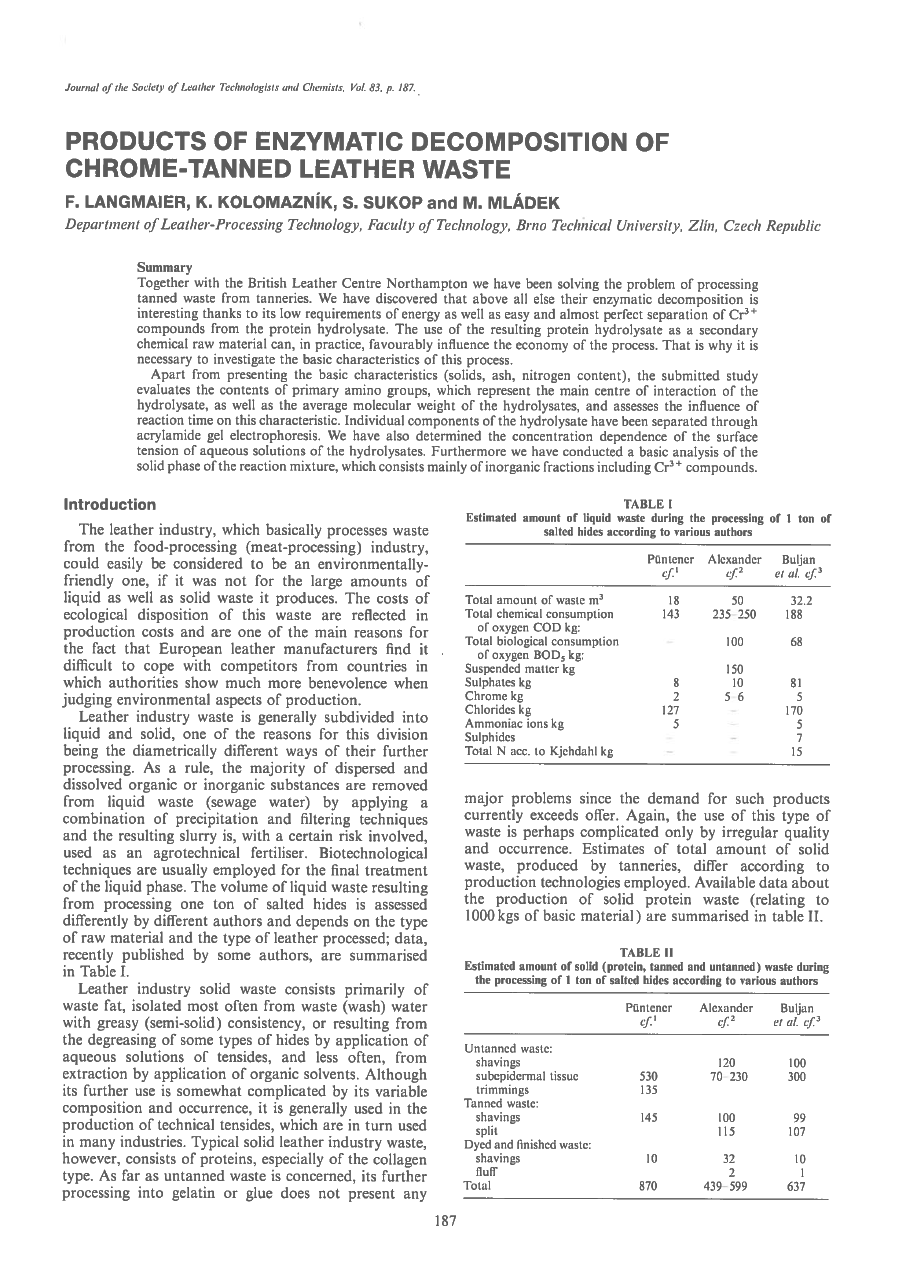
The nature of alkali used for the preparation of chromic hydroxide has been found to have profound influence on its settling behaviour. The settled volume of chromic hydroxide produced using NaOH, Na,C0 3,Ca(OH), and MgO has been found to vary from 72 to 8%. Similar variations have been observed in their particle size distribution. The mode of addition of alkali has been found to influence the settled volume of chromic hydroxide, with slow addition of alkali producing the most compact chromic hydroxide sludge. A pH of 8.5 9.0 has been found to be ideal for effective settling of chromic hydroxide using MgO as the precipitating agent. Precipitation of chromic hydroxide using NaOH, Na,C0 3and MgO has been found to leave 3.8, 3.6 and 1.4 ppm respectively of Cr(III) in the supernatant. Calcium hydroxide on the other hand was found to leave only 0.08 ppm of Cr(JII) in the supernatant. Scanning electron micrographs of the dried chromic hydroxide show that the morphology of dry chromic hydroxide is influenced by the alkali used to produce the chrornic hydroxide. Together with the British Leather Centre Northampton we have been solving the problem of processing tanned waste from tanneries. We have discovered that above all else their enzymatic decomposition is interesting thanks to its low requirements of energy as well as easy and almost perfect separation of Cr3 compounds from the protein hydrolysate. The use of the resulting protein hydrolysate as a secondary chemical raw material can, in practice, favourably influence the economy of the process. That is why it is necessary to investigate the basic characteristics of this process.
Apart from presenting the basic characteristics (solids, ash, nitrogen content), the submitted study evaluates the contents of primary amino groups, which represent the main centre of interaction of the hydrolysate, as well as the average molecular weight of the hydrolysates, and assesses the influence of reaction time on this characteristic. Individual components of the hydrolysate have been separated through acrylamide gel electrophoresis. We have also determined the concentration dependence of the surface tension of aqueous solutions of the hydrolysates. Furthermore we have conducted a basic analysis of the solid phase of the reaction mixture, which consists mainly of inorganic fractions including Cr 3compounds.
£20.00
Are you a member? Log in for access to the article.