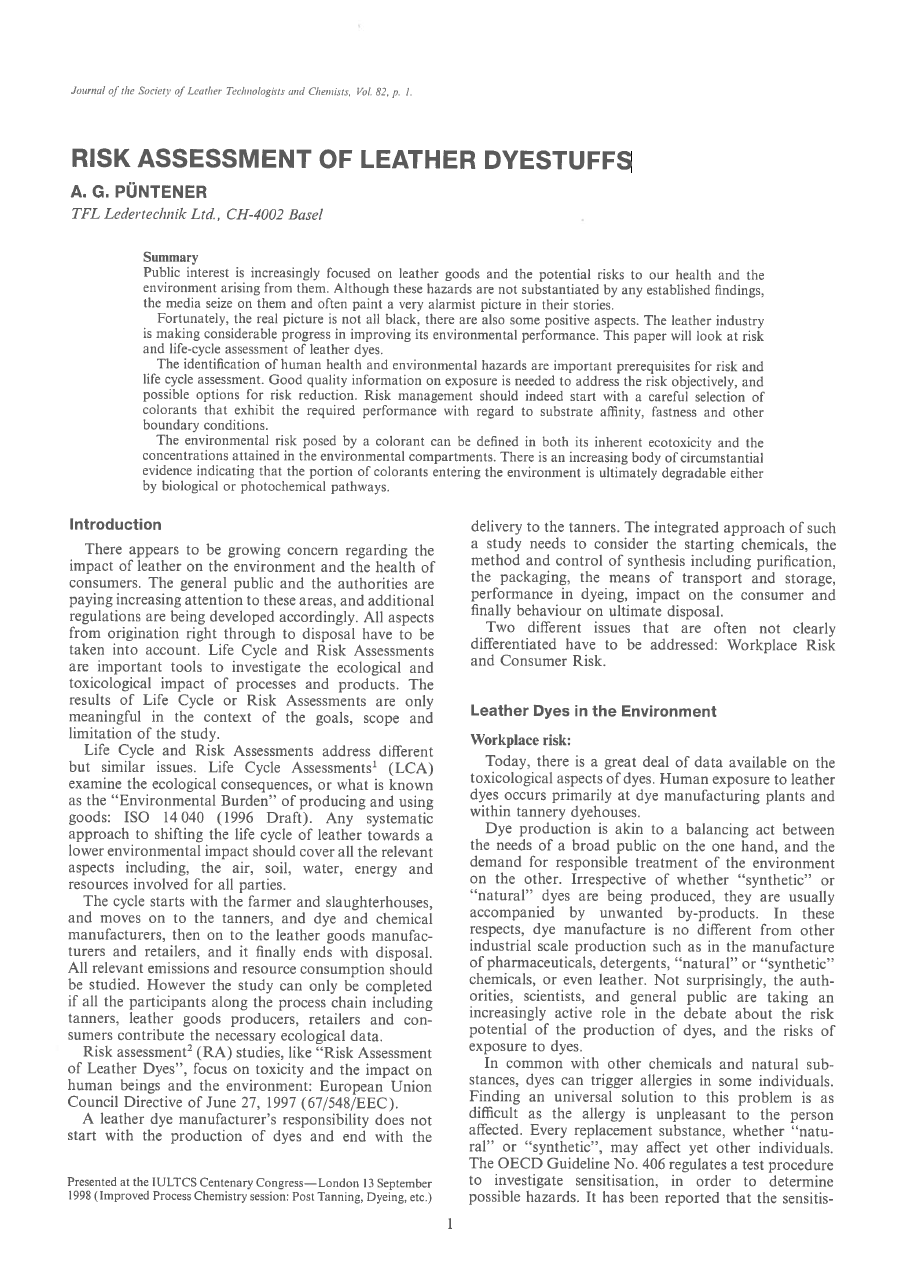
Public interest is increasingly focused on leather goods and the potential risks to our health and the environment arising from them. Although these hazards are not substantiated by any established findings, the media seize on them and often paint a very alarmist picture in their stories.
Fortunately, the real picture is not all black, there are also some positive aspects. The leather industry is making considerable progress in improving its environmental performance. This paper will look at risk and life-cycle assessment of leather dyes.
The identification of human health and environmental hazards are important prerequisites for risk and life cycle assessment. Good quality information on exposure is needed to address the risk objectively, and possible options for risk reduction. Risk management should indeed start with a careful selection of colorants that exhibit the required performance with regard to substrate affinity, fastness and other boundary conditions.
The environmental risk posed by a colorant can be defined in both its inherent ecotoxicity and the concentrations attained in the environmental compartments. There is an increasing body of circumstantial evidence indicating that the portion of colorants entering the environment is ultimately degradable either by biological or photochemical pathways.
£20.00
Are you a member? Log in for access to the article.