Utilization of Water Hyacinth in the Treatment and Disposal of Tannery Waste Water
Abstract
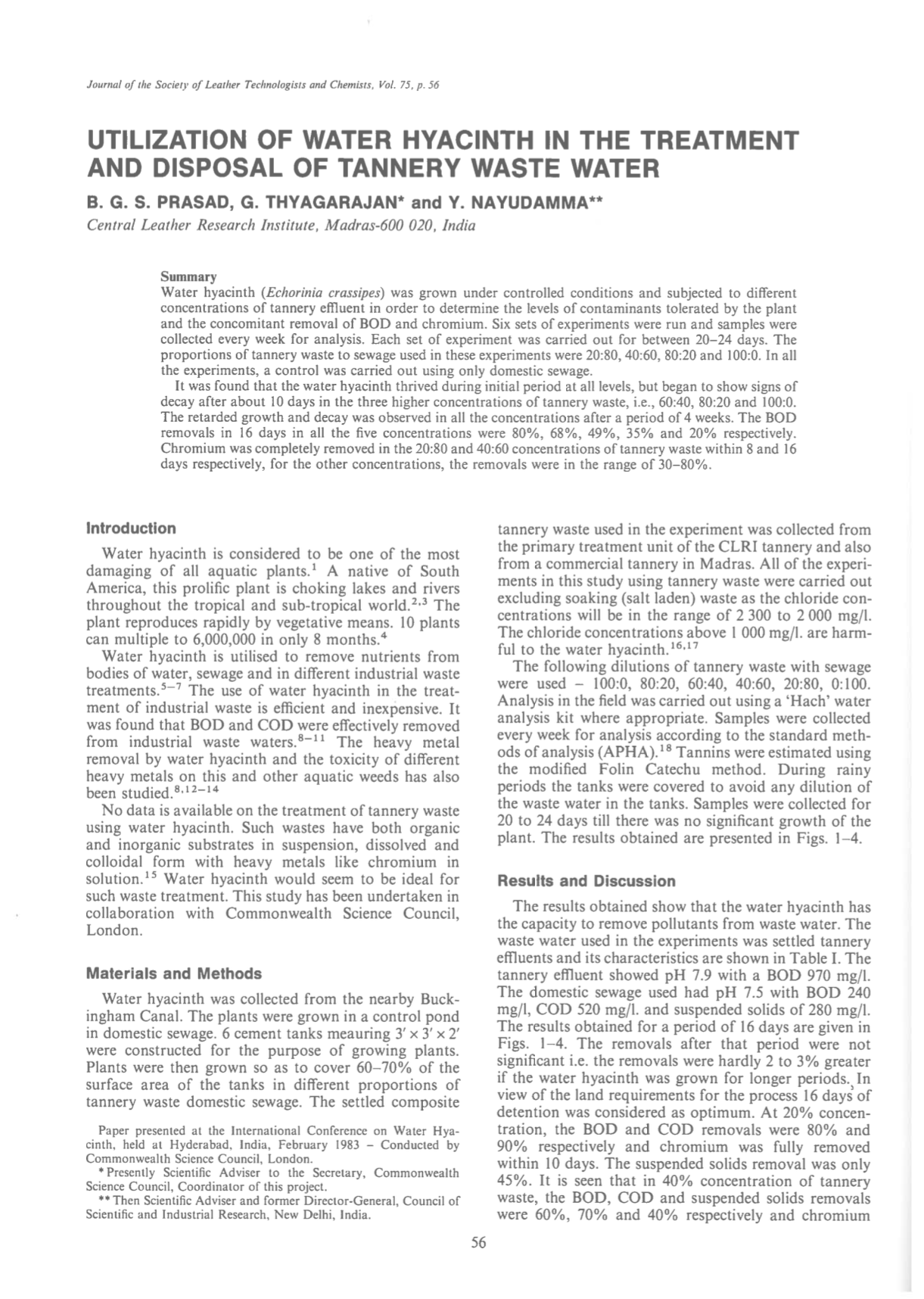
Water hyacinth (Echorinia crassipes) was grown under controlled conditions and subjected to different concentrations of tannery effluent in order to determine the levels of contaminants tolerated by the plant and the concomitant removal of BOD and chromium. Six sets of experiments were run and samples were collected every week for analysis. Each set of experiment was carried out for between 20-24 days. The proportions of tannery waste to sewage used in these experiments were 20:80, 40:60, 80:20 and 100:0. In all the experiments, a control was carried out using only domestic sewage. It was found that the water hyacinth thrived during initial period at all levels, but began to show signs of decay after about 10 days in the three higher concentrations of tannery waste, i.e., 60:40, 80:20 and 100:0. The retarded growth and decay was observed in all the concentrations after a period of 4 weeks. The BOD removals in 16 days in all the five concentrations were 80%, 68%, 49%, 35% and 20% respectively. Chromium was completely removed in the 20:80 and 40:60 concentrations of tannery waste within 8 and 16 days respectively, for the other concentrations, the removals were in the range of 30-80%.
£20.00
Are you a member? Log in for access to the article.
Volume Number
75
Author(s)
B. G. S. PRASAD; G. THYAGARAJAN; Y. NAYUDAMMA
Utilization of Water Hyacinth in the Treatment and Disposal of Tannery Waste Water